
The First Conversation Framework
A practical methodology for transforming the first client conversation
Redesigning the interaction so that commercial success and personal satisfaction become natural outcomes of the Serving Path
The Problem
Most financial advisers and accountants are highly trained technically,
yet receive little or no guidance around how to structure conversations with clients and potential clients
So many technically trained professionals feel discomfort in these meetings — not because they lack intelligence, care, or expertise, but because they were never shown a clear method
For some, it simply does not feel natural
For others, they do not want to appear pushy or “salesy”
Whatever the reason, the discomfort can be overcome.
Why It’s Not Easy
The difficulty is not a lack of technical skill
Under the pressure of a first meeting, the technical brain often defaults to three familiar response habits:
Self-Focus:
Thinking about your own performance or what you should say next
Outcome Control:
Trying to steer the client toward a specific result or KPI
The Diagnostic Gap:
Defaulting to "telling" in an effort to build credibility and trust
These familiar response habits create internal pressure and often derail real connection
Every first meeting tends to follow one of two distinct patterns:
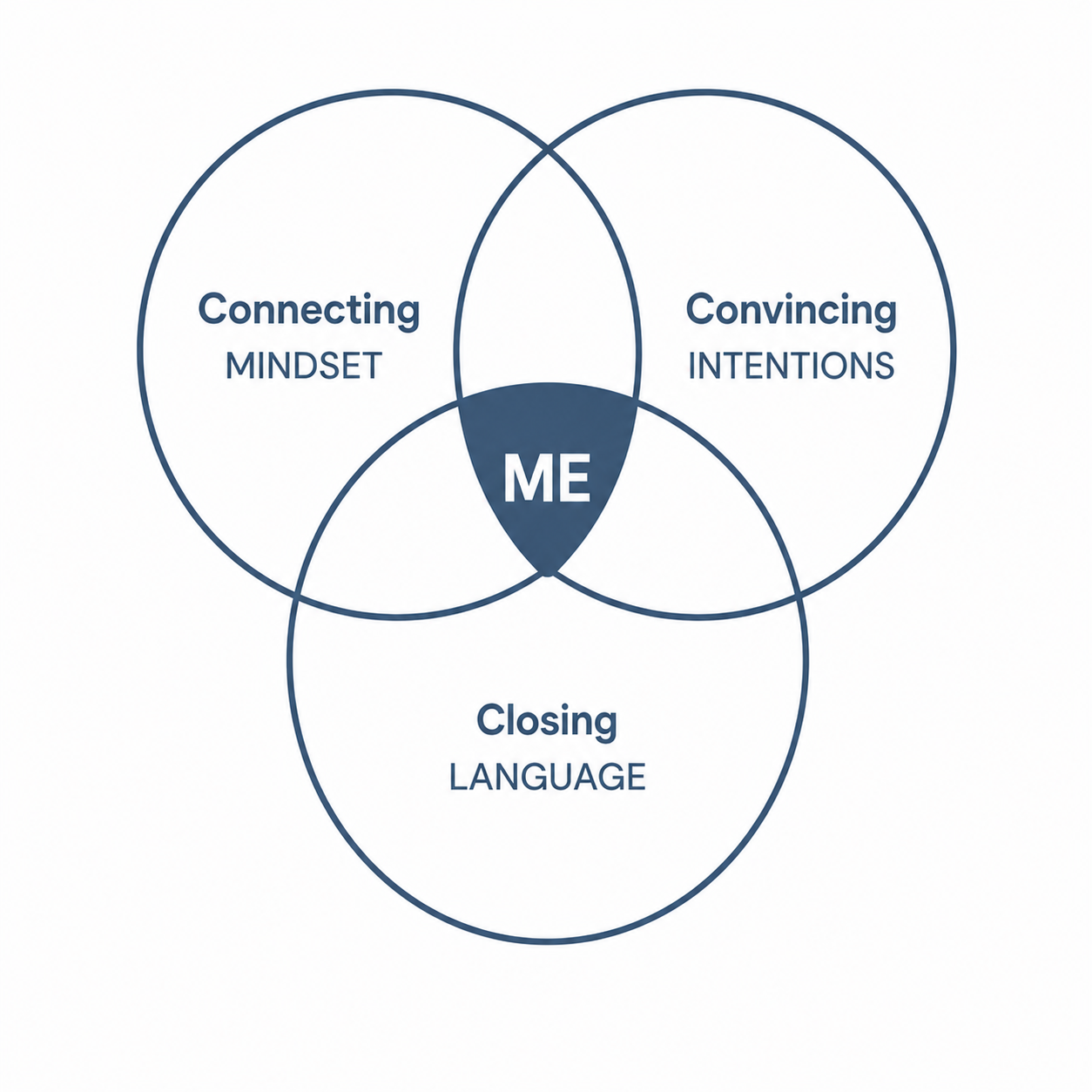
The Selling Loop
Pressure-Based
The World of Selling (Focused on ME)
Mindset
Intentions
Language
Connect (to find an opening or make a sale)
Convince (to change the potential client’s mind or hit a KPI)
Close (to hit a target or finish a “sales cycle”)
The traditional 5 steps of selling
Build rapport
Find the hot buttons
Overcome objections
Close the sale
Ask for referrals
Often creates pressure, overthinking & weaker connection
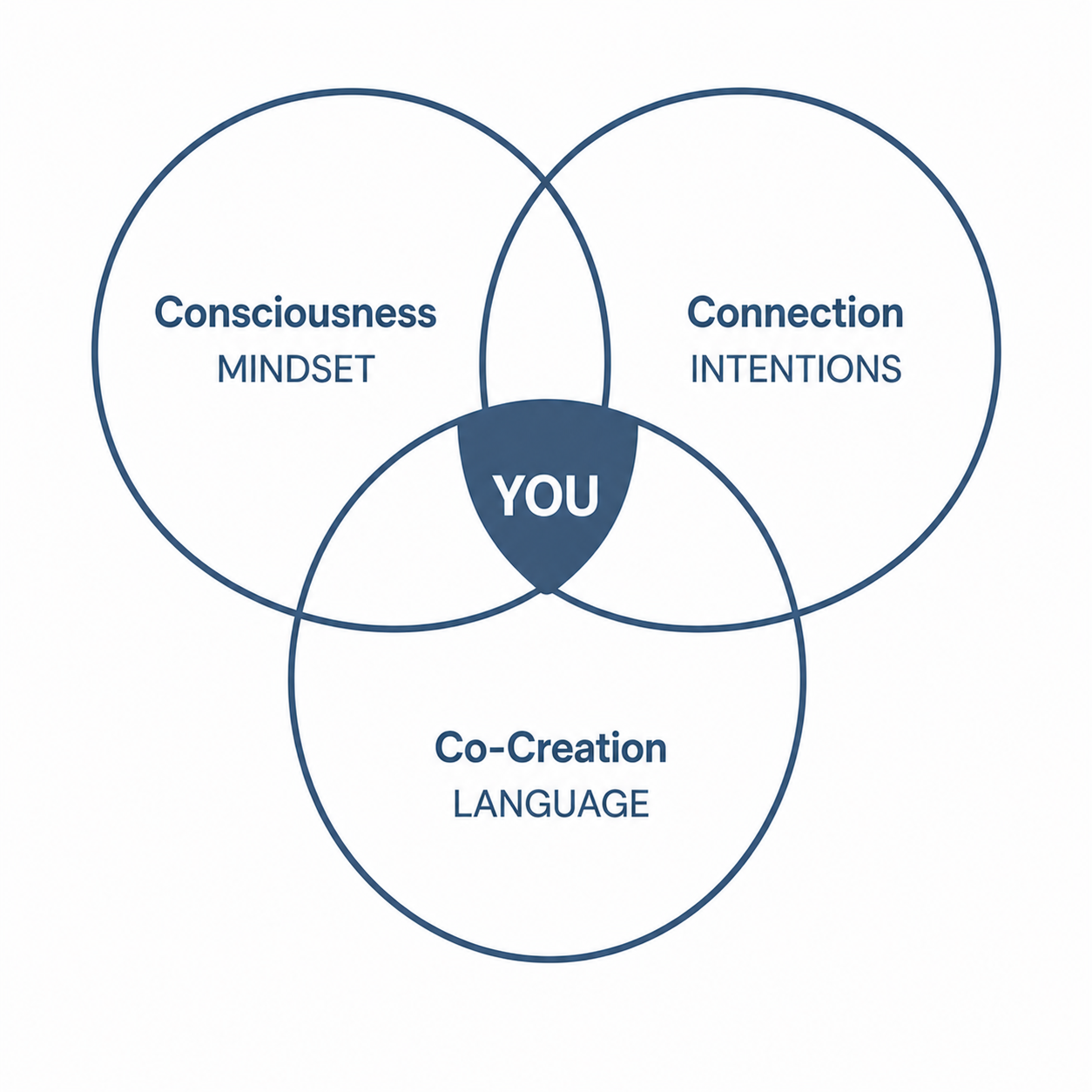
The Serving Path
Value-Based
The World of Serving (Focused on YOU)
Mindset
Intentions
Language
Consciousness (understanding your true role)
Co-Creation (finding an appropriate outcome - or not - collaboratively)
Connection (to help if appropriate - no agenda)
The alternative 5 steps of serving
Allow trust to develop (or not)
Identify issues needing to be addressed
Identify areas requiring clarification
Let them know…
Let them know…
Often creates clarity, connection, and stronger commercial outcomes
2. Connection
Intentions: Understanding your true role
Connection:
Is not about "building rapport" by the force of your personality, or the “gift of the gab”
It is about allowing trust to develop - or not - by the clarity of your example
Potential clients simply want to know you are there for them, not for yourself or your firm
That requires a redesign of the first part of the meeting
The Diagnostic Phase
Let your potential client tell you about their world by first asking:
How much time have you set aside for our meeting today?
What prompted you to agree to meet with me today?
What do you think prompted (name) to suggest you meet with me? (if referred to you)
What experiences have you had working with people in my role in the past?
How do you think someone in my role helps people?
The Reciprocity Phase
Only after they have had the opportunity to tell you about their world do you share the human reality behind your technical expertise:
What you do
Not your label — how you help people
Why you do it
Your personal motivation beyond commercial outcomes
What you do? (not your label - how you help people)
The First Conversation Framework works through three pillars of transformation:
1. Consciousness
Mindset: It’s not about me
Most experts have been conditioned to focus on targets, outcomes, and the need to convince.
That creates internal background noise.
The shift begins with a simple realisation:
It’s not about me
When you truly see this, performance pressure begins to lose its power.
To interrupt the background noise, ask yourself of every thought or rehearsed sentence:
Who is that all about?
Who is that REALLY all about?
This is the beginning of professional freedom
3. Co-Creation
Language: The mechanics of how
Co-Creation begins when your language becomes as precise as your technical advice
Language is the “how” of the interaction
We examine current conversations through four filters to determine what changes are required
For some it is just a band-aid, for others major surgery
The Four Filters
Non-invasive:
Removing obvious "pushy" or "salesy" words and phrases
Example:
Instead of: Tell me about…
Try: Will you tell me a bit about…
Neutral:
Using language with no unnecessary connotations
Example:
Instead of: Prospect
Use: Potential client
Clarity:
Making sure your meaning is unambiguous
Non-jargon:
Removing technical industry language your potential client might not understand
The Serving Path in action
Two familiar steps in the selling loop are:
-close the sale
-ask for referrals
On the Serving Path both become “Let them know…”
Instead of “closing the sale”
You simply let them know:
“That completes my part, now it is over to you to let me know if, and how, you would like to proceed from here…okay?”
Instead of “asking for referrals”
After they choose to become your client, you let them know:
“If there is anyone in your world, now, or in the future, who you think may need my help, I want you to know I will always make time in my diary for them…okay?”
This is not a small wording adjustment
It is a completely different orientation
Why?
Because it’s not about me.
Greater commercial success is a natural outcome of serving well
This framework is not just about "soft skills".
It is a competitive advantage and a professional necessity for people whose role it is to help others.
The only pre-requisite is a genuine care for the people who cross your professional path.
When:
Mindset shifts to Consciousness
Intentions align with Connection
Language evolves into Co-Creation
you no longer have to 'chase' results -
commercial success becomes an outcome of the Serving Path
What Clients Say
“Noel’s approach to client or potential client interaction is completely different, it challenged everything I knew and had been taught.”
Cathy Brown, Director ACTIV8FINANCE

How I Work
This is an experiential process
I work 1:1 over a period of 2-3 months, focusing on your real-world conversations—particularly your first client meetings
This is about allowing your expertise to be heard without having to change who you are
Who this is For
Financial advisers and accountants who:
do not see themselves as salespeople
do not want to feel “pushy” or “salesy”
think their first client conversations don’t always flow as well as they could
want a clearer, more reliable way to approach them