The First Meeting Framework
A practical methodology for transforming the first meeting with a potential client.
-
The difficulty is not a lack of technical skill.
Under the pressure of a first meeting, those with no deep insight into how to connect with others, those who experience discomfort trying to connect, and indeed most of us some time, default to:
Self-Focus:
Thinking about the need to perform, impress, achieve outcomes, or what to say next.
Tell-Focus:
About us, our firm, our credentials and experience in an effort to build credibility and trust.
Fact-Focus:
The reflex to gather information to identify “issues needing to be addressed” as a proxy for establishing a human connection.
These common response habits create internal pressure and inhibit connection.
Telling more than asking in the first meeting is the number one reason potential clients do not become clients.
In “business speak” this would result in a poor “conversion” rate over time.
The Structural Shift:
From Selling to Serving
The Selling Path
Pressure-Based
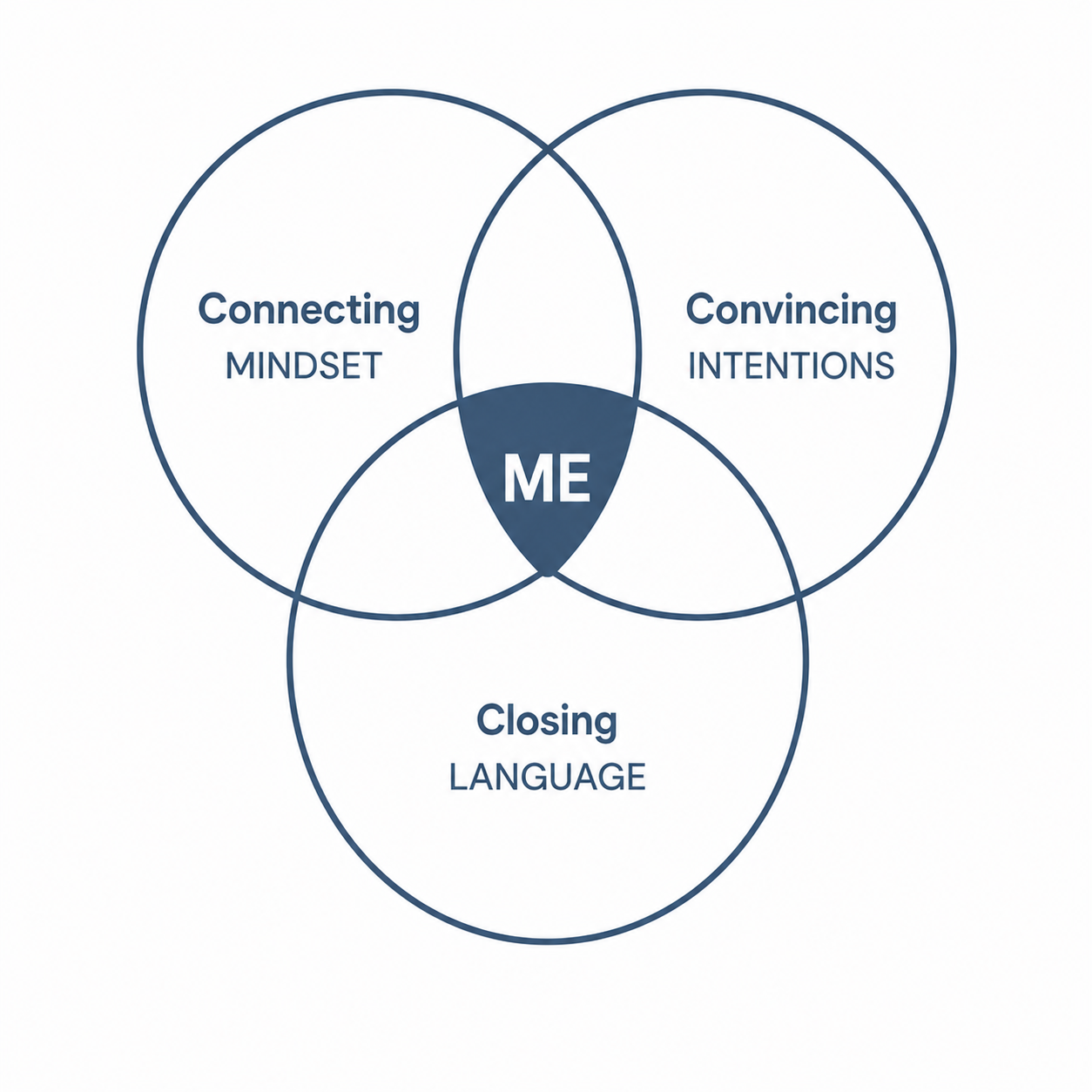
The World of Selling (Focused on ME)
Mindset: Connect — to make a sale / new client
Intentions: Convince — to overcome objections
Language: Close — to make a sale / new client
The traditional 5 steps of selling
Build rapport
Find the hot buttons
Overcome objections
Close the sale
Ask for referrals
Often creates pressure, overthinking & weaker connection
The Serving Path
Value-Based
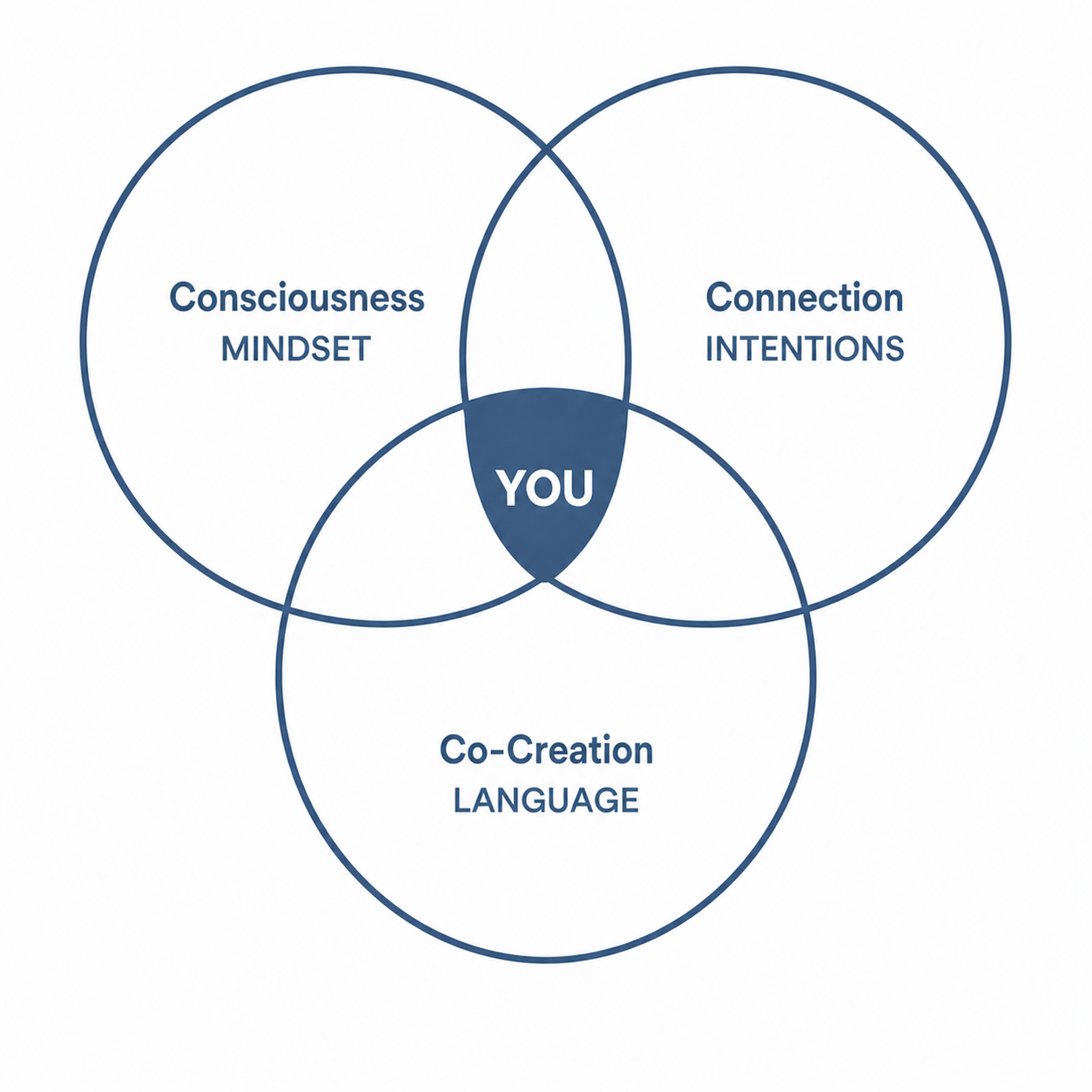
The World of Serving (Focused on YOU)
Mindset: Consciousness — it’s not about me
Intentions: Connection — by the clarity of my example
Language: Co-Creation — to agree any appropriate next steps
The alternative 5 steps of serving
Allow trust to develop (or not)
Identify issues needing to be addressed
Identify areas requiring clarification
Let them know…
Let them know…
Often creates clarity, connection, and stronger commercial outcomes
The Selling Path mindset focuses on achieving commercial success and helping people is an outcome.
The Serving Path mindset focuses on helping people and commercial success is an outcome.
The First Meeting Framework works through the three Foundations of Serving:
1. Consciousness
Mindset: It’s not about ME!
This small shift in thinking is the catalyst that has the power to free us from our own thinking and corporate conditioning.
In practice, we make meetings far more about ourselves than we realise.
Both consciously and sub-consciously.
And it’s only natural that we do.
For example, when we find ourselves silently worrying if we are appearing pushy or “salesy”.
To find out when we make it all about “me”, ask of every thought, rehearsed sentence, or learned phrase:
Who is that all about?
Who is that REALLY all about?
2. Connection
Intentions: Our true role
Connection and trust are not created by the force of our personality, or “telling” the potential client about us, our qualifications, or our firm.
“People don’t care how much you know
until they know how much you care.”
How can you demonstrate you care?
By asking, not telling.
First Meeting Framework—Structure
The Diagnostic Phase
What do you ideally want to know about your potential client(s) BEFORE gathering information about circumstances, goals and objectives?
What questions do you ask to find out?
For me, I would like to know:
Why they think they are meeting with me.
How they think I can help them.
Previous experiences.
The First Four Questions
If you would like to know the four questions I ask to find out:
The Reciprocity Phase
Responses to The First Four Questions allow you to learn a lot about your potential client(s).
Now is the time to share about you - not about your qualifications, experience, or the firm - what you do and why you do it.
Structuring the start of every first meeting this way ensures “intimacy” -
in-to-me-you-see, for your potential client(s), and for you.
How do you respond when asked “what do you do?”
Most just say the label the commercial world gives us…
“I’m an accountant”
“I’m a financial planner”
Consider a different question…
How would you describe what you do?
Start with “I help people…”
Why do you do what you do?
What it gives you beyond money and lifestyle.
An example from a Financial Planner client:
“I help people navigate the complexities of their financial lives.”
“I do this for the satisfaction I feel when I see them achieving their lifestyle goals and objectives.”
Structuring first meetings this way creates “intimacy” -
in-to-me-you-see, for your potential client(s), and for you.